From the Latin regenerare — to be reborn, to recreate — regeneration designates that profound movement by which a damaged thing recovers its vitality, its coherence, its power of being. Regeneration is a transformative rebirth. It is explored here across three fundamental dimensions of our existence: spirit, body and soil — three distinct entities, yet intimately bound within a single breath of life.
Regenerative Matters brings together seven artists around a shared conviction: regeneration is not only an agricultural act, but also and above all a cultural one. The guiding thread of Regenerative Matters is ceremony — not the solemn, fixed rite, but living practice, rooted in the everyday. A ceremony is a sequence of actions, words and objects, often repeated at regular intervals: daily, seasonal, or tied to significant events. These moments resonate with meaning, forging a link between the sacred and the profane, between individual gesture and collective memory.
The works presented interrogate the rituals of social connection, exploring ceremony through shared experience, mutual aid and the exuberant expression of life. They invite reflection on how artistic practices can facilitate processes of mourning and resilience.
The Mind is the first dimension invoked in Matters of Regeneration.
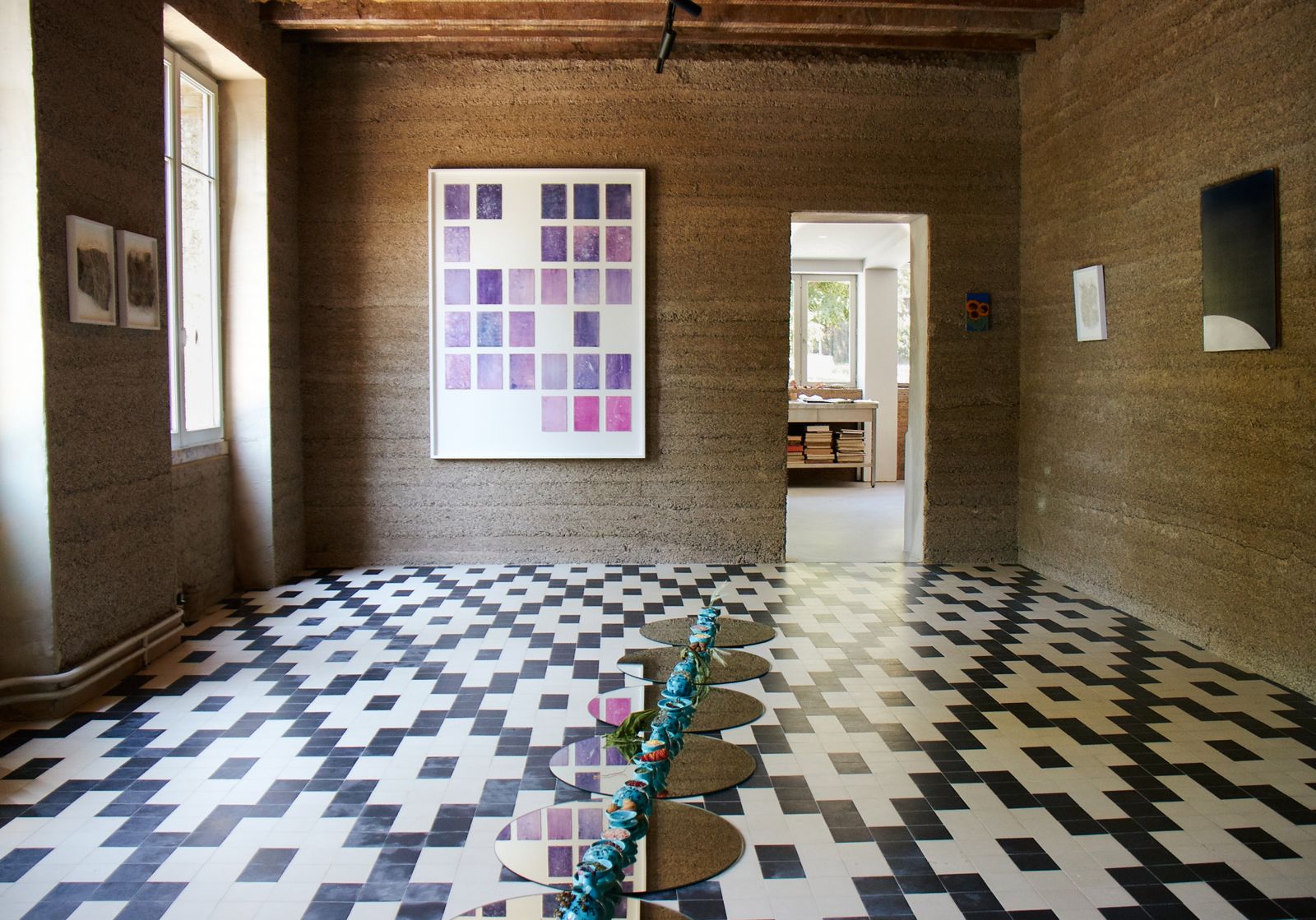
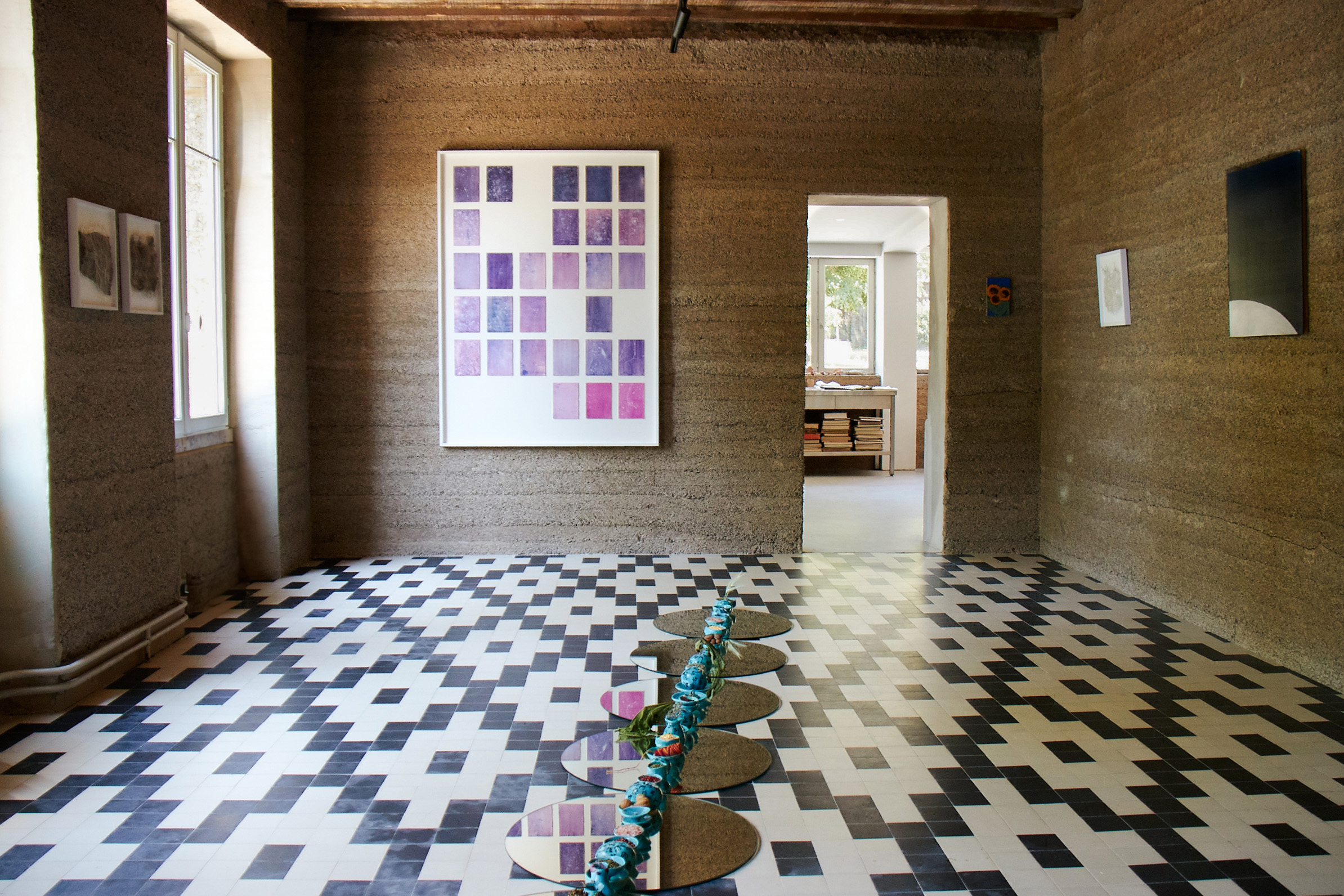
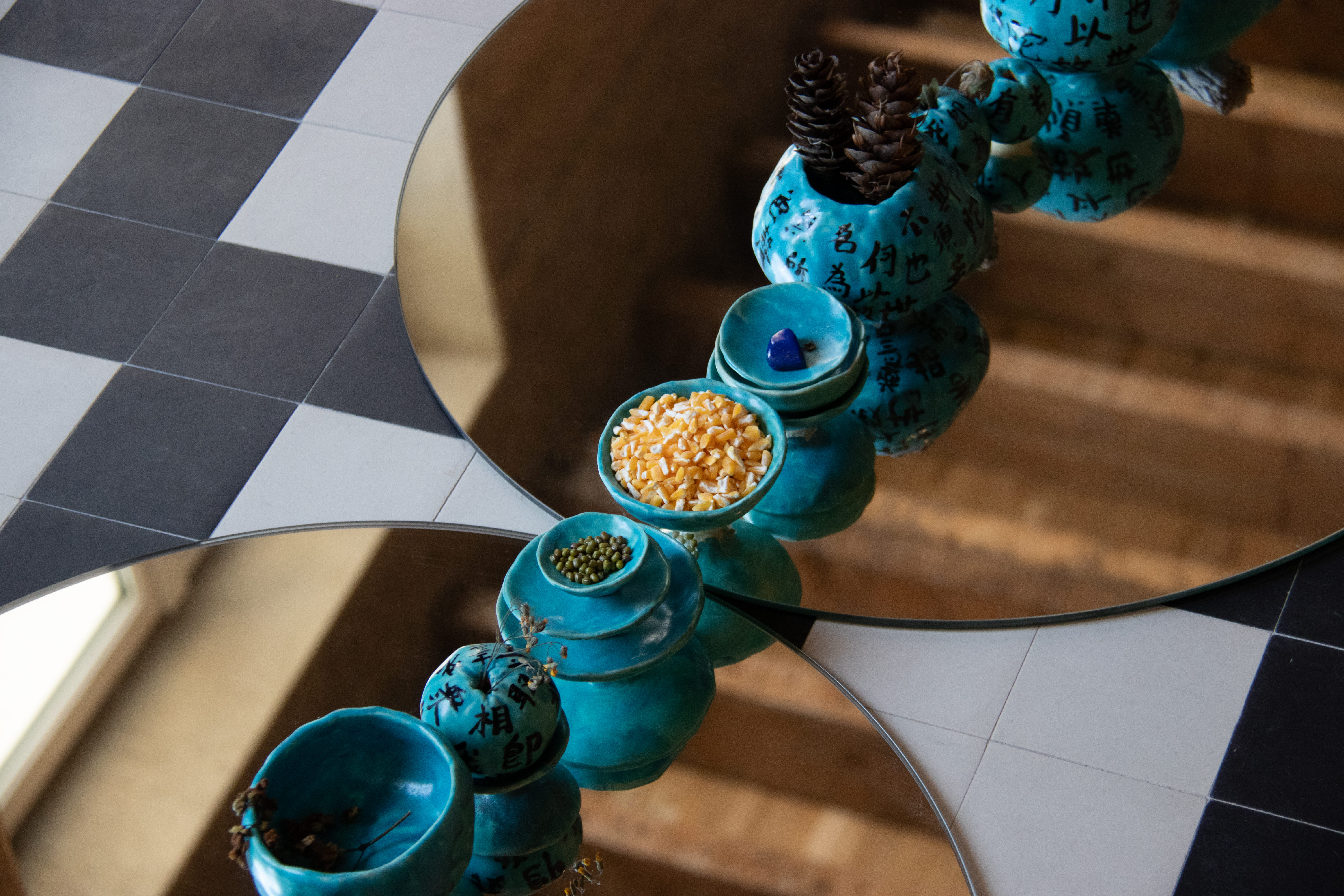
Visitors begin at the ground, where Ancient Desires unfolds as a series of hand-painted ceramic vessels, each inscribed with mantras and filled with ephemeral offerings gathered from the farm: seeds, flowers, stones, water and earth. Resting on circular mirrors that multiply their presence, these quiet gestures become symbolic offerings for the collective well-being of all living beings.\
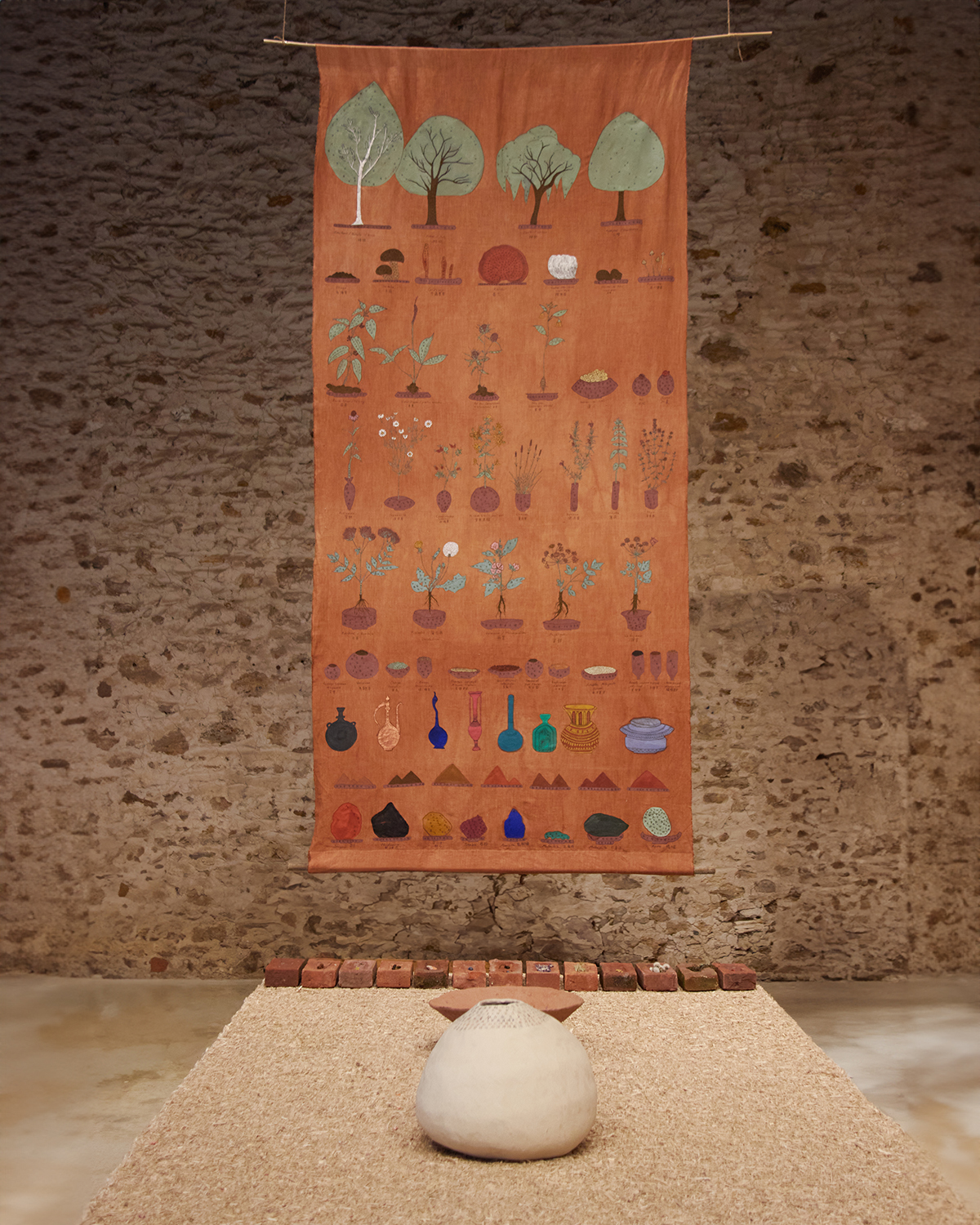
The journey continues upwards with Finding Remedy, a suspended hemp canvas woven from Blanc de Blanc hemp grown at 91530 Le Marais and naturally and locally dyed with cashew husks. The artist begins by painting minerals, then pigments, and finally the homeopathic plants and trees, using natural pigments.
Charwei Tsai paints a meditation on healing, interconnection and the living world.
From earth to sky, her works invite us into a ceremony of care, where natural materials become vessels for reflection, generosity and regeneration.
From earth to sky, her works invite us into a ceremony of care, where natural materials become vessels for reflection, generosity and regeneration.
Within the hemp cube, Christine Safa presents a series of small-format paintings born of a ritual of preparation: the canvas coated in natural pigments, a repeated, patient gesture, like a meditation on the connection between body and spirit. She paints from memory. Interior landscapes, embracing figures, portraits sometimes doubled as though memory itself hesitated to settle. Sunflowers believing in spring, families held together in the warmth of intertwined bodies. This quiet happiness translates into coral orange, blazing yellow, ultramarine blue — a solar palette carrying the artist's Mediterranean origins. From these paintings emanate an elusive scent, an elusive freshness. The layering of pictorial strata, the blurring of colors, the imprecision of contours speak to the resistance of memory — the difficulty of transforming images, of melting them down, of modulating their emotional charge. For Regenerative Matters, painting from memory becomes an intimate, repeated ceremony. Each layer is a gesture of regeneration: allowing the ruins of memory to recover a new vitality. Figures fade, become matter. And within that fading, something is reborn. "I approach my paintings as tributes, as fragments of memory, what remains. It is what remains that I paint," says Christine Safa.
"The body is the very site of our existence — the flesh in which all experience takes form."
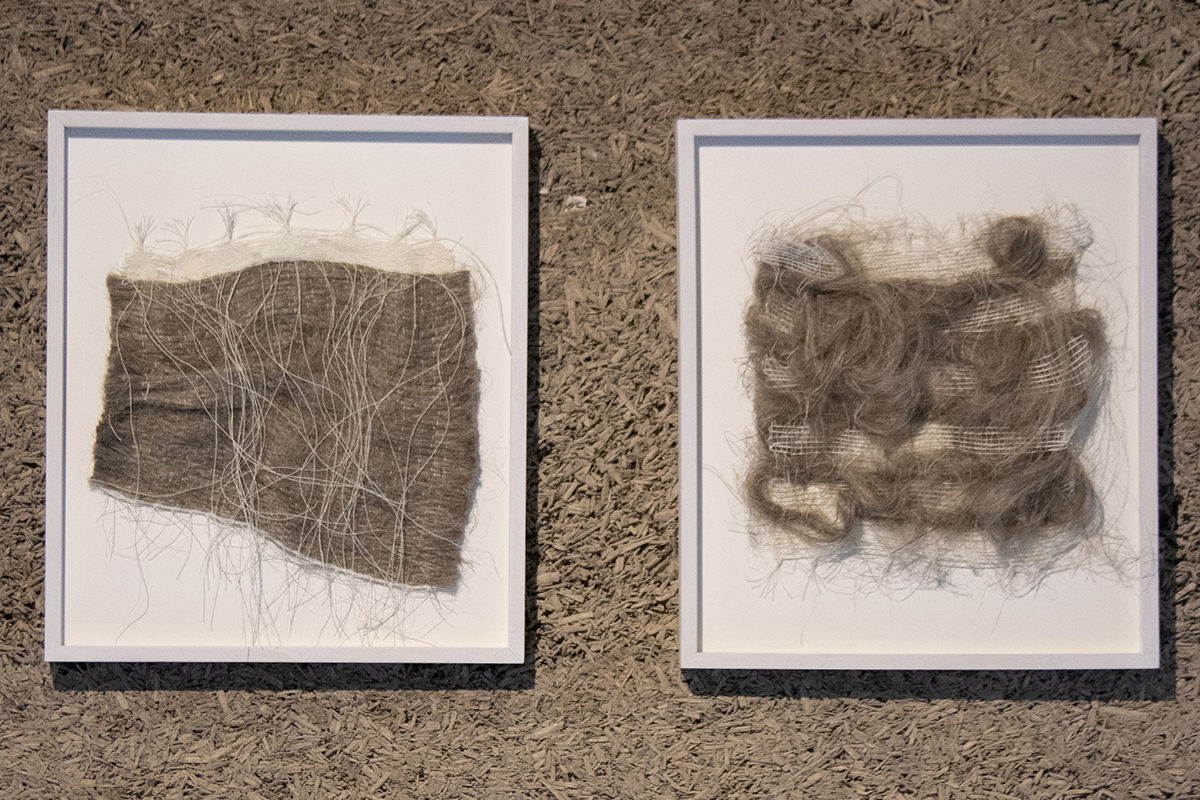
In these small hand-woven works, Marie Hazard orchestrates an exchange of status between materials: hemp and linen sit alongside recycled inner tubes, silver thread, nylon, jute and paper. Each piece finds its balance in space, light, image and meaning. Working at a hand loom with materials, she subverts textile from within — not to destroy the gesture, but to free it from the docility it has inherited.
The nocturnal blue of Anna Eva Berghman's N°30-1970 Fragment calls up the cosmos. Her use of silver leaf awakens night blues that recall the cosmos and the moon. Her reflections on light, line and form led her decisively toward "the art of abstraction." "Light puts me in a state of ecstasy," said Anna Eva Berghman, who reached a decisive artistic flowering in maturing a visual vocabulary founded on stripping-back, plays of balance, light, and "passage" (one of her favorite terms), drawing on cosmic and telluric terms: stone, star, tree, fire…
Désirée Moheb Zandi's work explores weaving in its sculptural and spatial dimensions, fusing hand-woven surfaces, sewn and mounted canvases, layered textiles and constructed supports. Through this approach, she explores how matter, gesture and memory can be translated into contemporary forms. Her artistic practice revolves around weaving, conceived both as physical process and conceptual framework — a way of exploring rhythm, repetition and transformation. Working mainly at the loom, she combines natural fibers, recycled threads and unconventional materials to create abstract, tactile compositions that explore identity, memory and cultural heritage.
Eric Croes' ceramic piggy banks in the form of wild boars — eight double-sided pieces, hand-shaped and fired — embody the fundamental gesture of matter transformed. Rooted in the earth, they evoke accumulation, cycles, and the invisible forces that shape the soil. In forest ecosystems, the boar plays an essential role: by digging through the earth, it aerates it, disperses seeds and fosters biodiversity. Destruction and regeneration are here intimately linked. Even after a fire, its action contributes to nature's renewal. This exhibition follows this same dynamic: art as creative disruption, and beauty as a form of repair.
Soil, finally, is perhaps the most forgotten dimension of this triad. Beneath our feet unfolds one of the most complex biological adventures there is: a single gram of healthy soil can contain several billion living organisms.
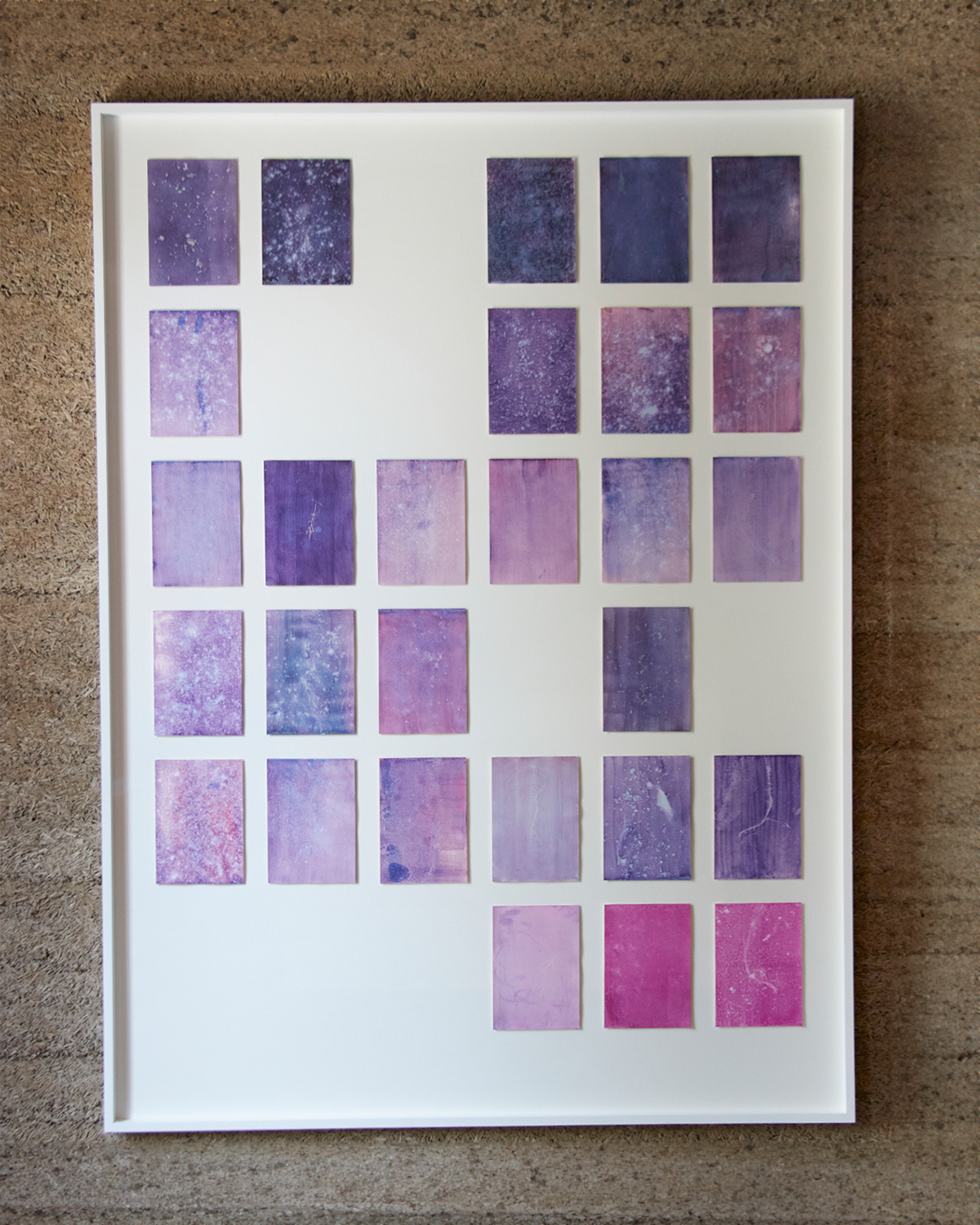
Caroline Corbasson records the imprint of soil onto photosensitive paper, revealing thereby an ecosystem ordinarily imperceptible. Echoing August Strindberg's celestographs, these works on paper belong to an observation situated at the border between science and fiction — a territory dear to the artist. Stars, morning dew, dust, or fragments of earth?
To regenerate is to choose another temporality. To slow down in order to better endure. To take care in order to better receive. It is to understand that true wealth is not what one accumulates, but what one preserves — within oneself, between one another, and beneath one's feet.
%20(1).jpg)